How Character Discovery Works on an Unfiltered AI Chat Site
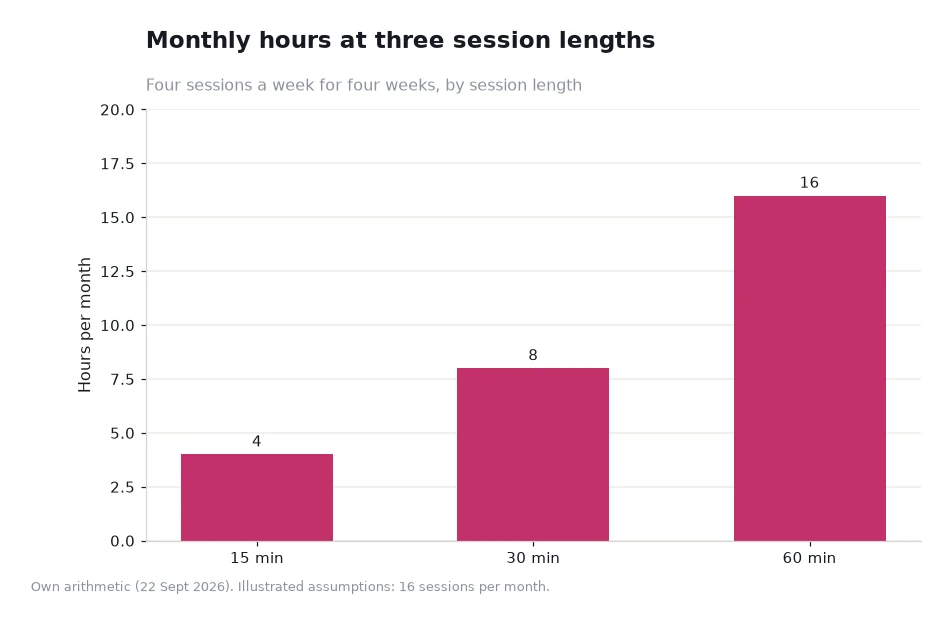
Discovery on an unfiltered character site is mostly a filtering problem: the library is far larger than any one shelf, so the surface you land on decides what you see. The Crushon navigation splits browsing into Characters, Memories and Creators, with named sections such as Recent Hits and Animated plus chips for Unfiltered, Filtered and 18+ content and a gender filter. Time is the budget that matters, and 16 sessions a month at 30 minutes each is 8 hours — which is exactly why the filters earn their place.

Key takeaways
- Four entry points do most of the work: the character list, the Recent Hits and Animated sections, the filter chips and the search page.
- Filters come in three visible states — Unfiltered, Filtered and 18+ — plus a gender filter, so the same library produces very different pages.
- Unfiltered is not the same as unmoderated: the platform's own FAQ notes that some limitations apply under its content and community guidelines.
- Session length drives the real cost: 4 sessions a week for 4 weeks is 16 sessions, which is 4 hours at 15 minutes each, 8 hours at 30, and 16 hours at 60.
The surfaces you actually browse
Start with the character list. It is the default view and it behaves like a shop window: a mixed selection that changes as new releases arrive. Recent Hits is the narrower version of the same idea, favouring profiles that have picked up attention lately, and Animated collects entries that use motion or animated presentation. Between them they answer the question most readers actually have on arrival, which is not "what exists" but "what is worth opening in the next ten minutes".
Creators is the third shelf and the least used. It is the surface for following people rather than sampling profiles, and it becomes more valuable the longer you stay. Memories is the fourth, and it is not a browsing surface at all: it is where continuing threads live. Anyone who treats it as a place to shop will be disappointed, and anyone who ignores it will keep restarting conversations that never had a chance to accumulate.
The order in which you use these surfaces matters. Browsing the list first and filtering later is the slow path, because every filter applied afterwards throws away cards you have already read. Choose the filter state first, then browse. A reader who sets the register and the gender preference up front sees a shorter page, but a much higher share of what is left is worth opening.
What the filter chips change
The visible chip states are Unfiltered, Filtered and 18+, and there is a separate gender filter. They are coarse controls by design, and they work best as a first cut rather than a final answer. Two readers searching the same tag can end up with pages that share almost nothing, purely because their chips sit in different positions.
One clarification is worth repeating because it is widely misunderstood. Unfiltered describes the browsing mode, not the platform's rules. The site's FAQ states that some limitations apply in accordance with its content and community guidelines, and there are published routes for reporting a profile that falls outside them. A reader who expects a mode called Unfiltered to mean "nothing is reviewed" will also misjudge what the report route is for.
| Surface | Best for | What it costs you |
|---|---|---|
| Character list | A broad first pass over what exists today | Broadest results, so the most scrolling per useful card |
| Recent Hits | Seeing what other readers opened this week | Favours recency, so older profiles are pushed out |
| Animated section | A specific presentation style | Narrower pool; the filter is visual, not thematic |
| Filter chips (Unfiltered / Filtered / 18+) | Setting the register of the whole session | One setting governs every shelf, so choose it first |
| Character search | Looking for a tag or keyword you already have in mind | Only as good as your search terms |
| Memories | Continuing a thread you already started | Nothing new is discovered here |
Worked example: costing a month of discovery
Take a simple pattern: four sessions a week for four weeks. That is 4 multiplied by 4, or 16 sessions a month. Now attach session lengths, which is what the chart alongside this section plots. At 15 minutes a session, 16 multiplied by 15 is 240 minutes, or 4.0 hours a month. At 30 minutes, 16 multiplied by 30 is 480 minutes, or 8.0 hours. At 60 minutes, 16 multiplied by 60 is 960 minutes, or 16.0 hours. The pattern is illustrative rather than measured, and it is meant to be edited to match your own habits.
The useful move is to convert those hours into cards. If sampling one character properly takes about four minutes, the 15-minute pattern covers roughly 60 cards a month, the 30-minute pattern about 120, and the 60-minute pattern around 240. Now set that against a library that keeps growing: 240 cards is a serious survey, but it is still a fraction of what is published, and the same arithmetic applies to the browsing you do on a phone between other things.
That is the case for filtering before browsing. Cutting the pool to one register and one gender preference does not reduce the number of useful cards you meet; it raises the share of the time that goes to cards you would have kept anyway.
Starting from the front page
The entry point for all of it is https://crushon.ai/, where the navigation, the section shelves and the filter chips sit together on one screen. Readers who already know what they want should skip straight to the character search page instead and type the tag they have in mind, while anyone deciding what is popular this week will get more from the NSFW AI trends chart than from the default list.
Whatever route you take, two habits pay off. Set filters before you start scrolling, and stop when a session has produced one card you actually want to keep. Discovery is not a completion exercise; a short list of cards you will return to beats a long list you will never open twice.
Frequently asked questions
Does Unfiltered mean the platform has no rules?
No. The site's FAQ says some limitations apply under its content and community guidelines, and each content page carries a report route. Unfiltered describes the browsing mode rather than an absence of review.
Which discovery surface should a new reader start with?
The default character list, with filters set first. Recent Hits and the Animated section are refinements for a second pass, and search is the right start for anyone who already has a keyword in mind.
Where do characters I want to keep turning up?
Saved characters and continuing threads sit in separate areas: favourites attach to a character, while ongoing conversations live under Memories in the main navigation.
Filter first, scroll second
Pick one register, one gender preference and one session length before you open anything, then browse for that fixed window and stop. If a card earns a place on your list, it will still be there next week, and the chart will tell you what else has moved in the meantime. The habit costs about the same as browsing without a plan and returns far more usable results.
Data and sources: the navigation, section labels and filter options shown on the platform's home page[1] and its published FAQ wording[2], read 22 Sept 2026. Session and card counts are illustrative assumptions, not platform data. Intended for adult readers, 18+.